MYLES IN BETWEEN
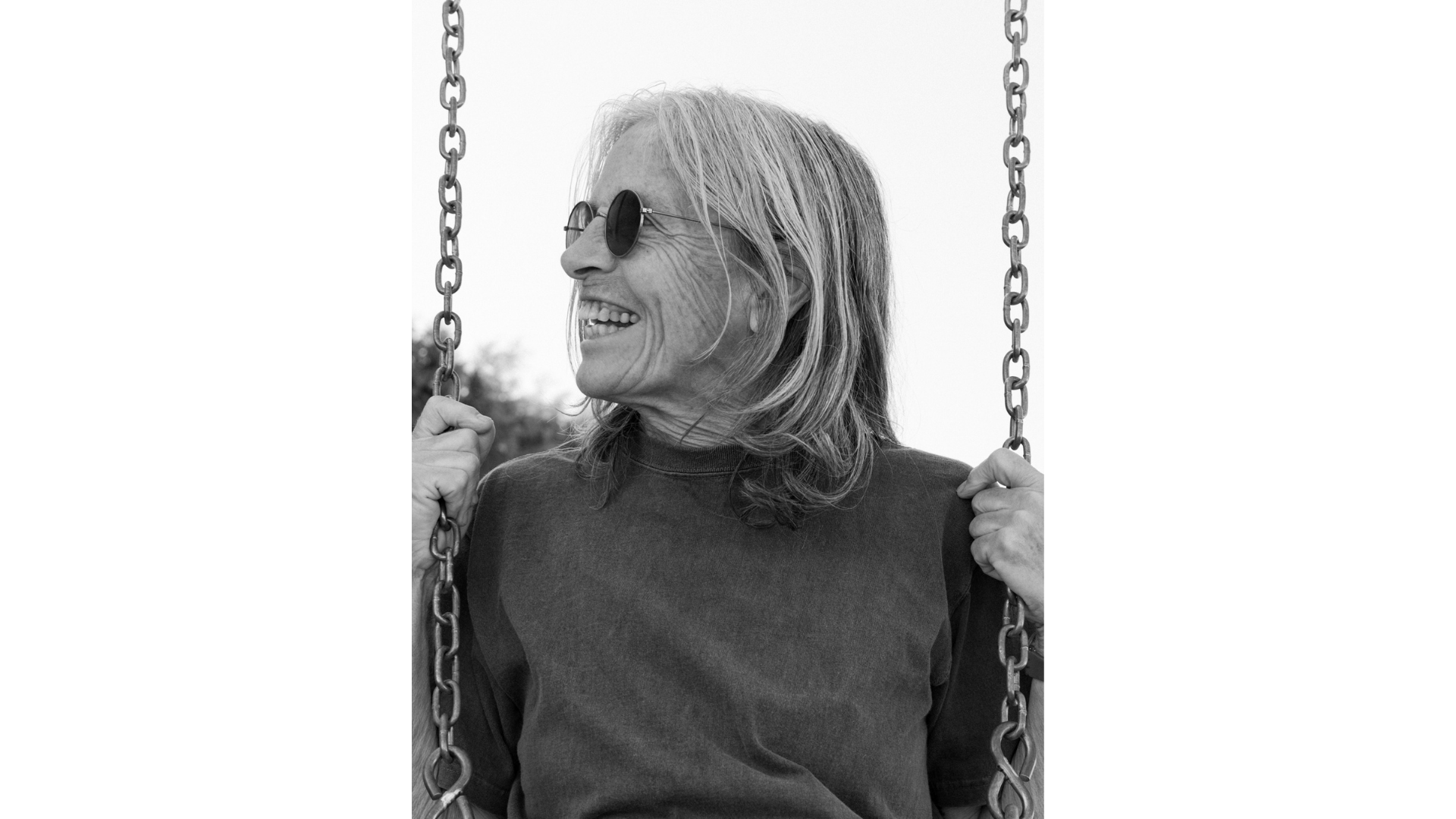
Interview September 2025. Artwork images courtesy of the artist. Photography by James Kramer. Edited by Mila Fowler.
“Can I pose the inside of my head on you?” Eileen Myles has puzzled this question for decades, wondering if they can share everything in between their ears. Eileen has spent their life reshaping the world of poetry and prose with a writing style that is intimate and unmistakable. From Chelsea Girls to their most recent poetry collection, A Working Life, they stay on the pulse of important issues, constantly blending art, personal life, and politics. Myles is a renowned poet, cultural icon, and a catalyst for change. Last fall we met them in Harbor Springs, Michigan, where we learned about their role in the world as an artist and how it has evolved throughout the years.
3: Living in Marfa and New York City, what impact has that community had on your practice? Have they changed?
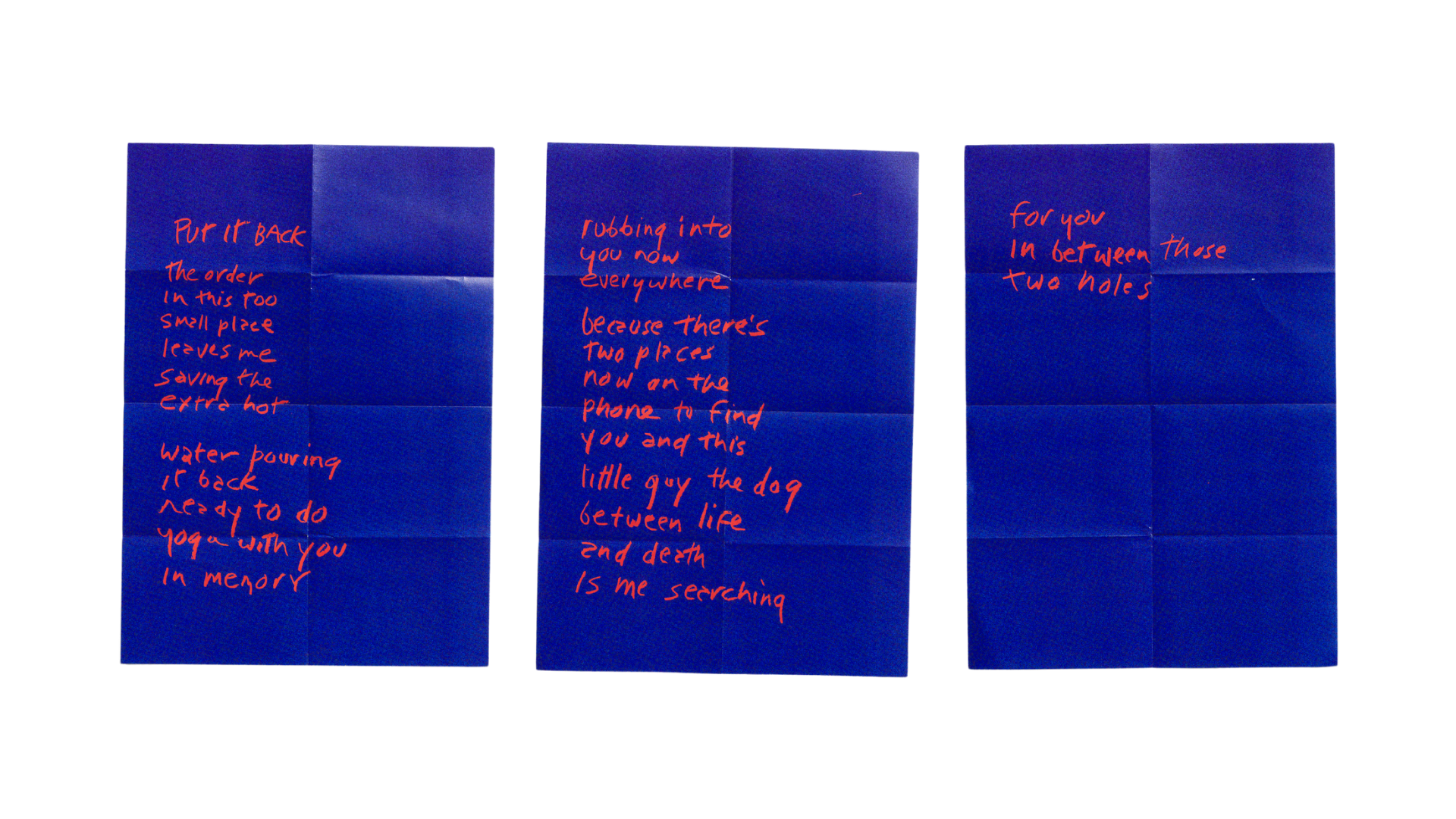
Poems for Versace. Image courtesy of the artist.
E: Yes and no. I’m still very much a part of St. Mark’s, my graduate school.
I came to New York in my 20s and went, very briefly, to grad school. I dropped out and then took workshops with Alice Notley and Ted Berrigan. I went to every reading there for 10 years, then became the director. It’s my place, that hasn’t changed.
Marfa is great because during the pandemic, there were readings; very little, open mic kind of readings. These people did not know who I was or what my work was, so it was fun to read parts of the novel I was working on in an open mic. Marfa’s both on the beat and then out of it in a way, it's a nice mix. I read occasionally in New York, it’s just like New York sucks you in. If I’m there, it’s hard not to work every night. It’s kind of like being a comedian or something. Please, can’t I just have a night to hang out with my friends? It’s very different, the way Marfa and New York are.
3: Have you felt that your working life has changed or developed through the course of your career?
E: When I began, it felt like my life was very simple; it was all about being a poet, and everything served that. It seemed like I always had time to write a poem. It was a very free, open life. I think a career kind of messes things up because then you suddenly have obligations, and it takes time. I feel like it became stronger and more complicated, and, now, I realize I need to be tougher with myself. No matter how much I want to do something, it might not be great for work. I’m trying to get simple again.
3: Does your voice as a writer shift through different approaches? You write novels, essays, poems, and art criticism, even; do you view this all as one practice?
E: I do think it’s all one thing, but in prose, you just get to have longer thoughts. Before I wrote novels, I told stories more in my poems. Now, there are little bits and pieces of things, but it’s more fragmented and incomplete.
3: We even found your art criticism to be somewhat poetic.
E: When I first started writing art reviews, I had to be conventional. But the more you get invited as yourself, the more that is what they’re paying for. I think, in a way, each part of my writing embraces some idea I have about the world or writing. When I first came to New York in the seventies, I read a book, I can’t remember the name, but they were saying that the new artist is somebody who, like Andy Warhol, is an enterprise. A Mexican publisher is publishing a few of my art essays, and they asked me to write an introduction. And suddenly, when I thought about art writing, I realized my favorite thing to do was put the artist in my world. Like, I’m the institution, and you’re getting the Eileen Myles treatment.
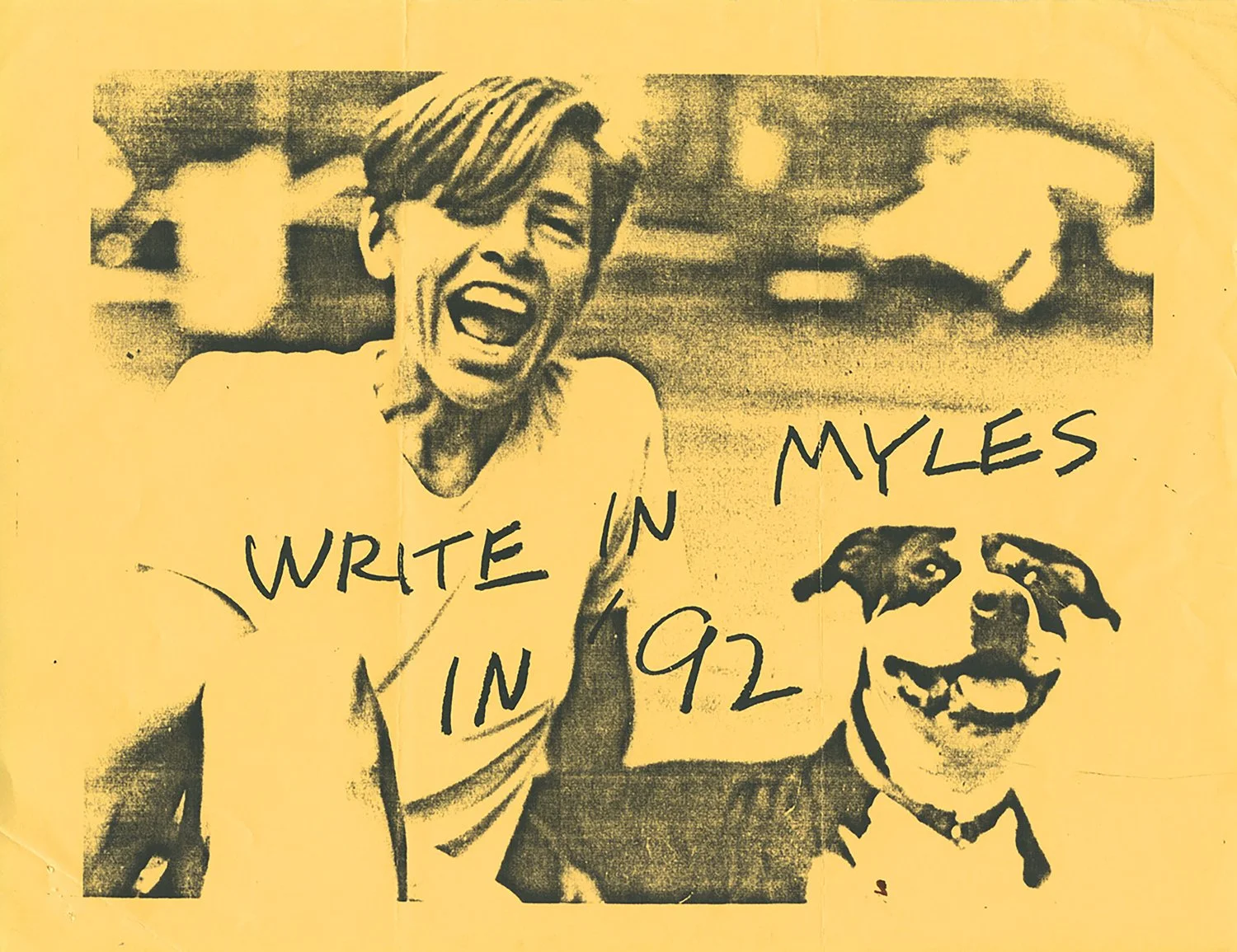
“Write in Myles in ’92” campaign flyer (1992) 11" x 8.5". Image courtesy of From a Secret Location.
3: Do you think poetry’s role has changed in the world? Or, do you think it’s still doing what it’s always done?
E: Both. I think it is still doing what it’s always done, but I think poetry is getting well distributed in the moment. It’s kind of exciting; I mean, even Versace wants a poem from me. That’s kind of crazy, you know? Part of it is cell phones and texting, our relationship to language, and how it’s proliferated in this environment. There’s room for poetry right now in a way that hasn’t been true for a few decades. But I think that’s part of the nature of it. It never goes away, but it has different credit at different points.
3: Do you have a favorite line of poetry?
E: I hear things all the time and experience it as poetry. I think the world is filled with good poetry in a very inadvertent way.
Read more about Eileen Cuthwulf Myles in Triple Issue 3.